

Acne scars are one of the most persistent reminders of past breakouts, and one of the most common reasons people seek professional skin care. If you’ve tried creams, serums, and home remedies without seeing real change, microneedling for acne scars may be the treatment worth exploring. This guide walks you through how it works, what to expect, and whether it’s right for your skin.
Key Takeaways
- Microneedling stimulates the body’s natural healing response to rebuild collagen and improve the appearance of acne scars over several sessions.
- SkinPen® Microneedling and SylfirmX are clinically proven to show meaningful improvement in as few as 3 sessions spaced 4 weeks apart, with results continuing to develop for months after treatment.
- SkinPen® Microneedling is FDA-cleared, safe for all skin types, including darker skin tones, and indicated for adults 22 and older.
What Are Acne Scars?
Acne scars are permanent or semi-permanent changes in the skin’s surface caused by inflammation from breakouts. They affect texture, skin tone, and confidence. The most common types include:
- Ice pick scars: narrow, deep scars that look like small puncture holes.
- Boxcar scars: wider depressions with defined edges.
- Rolling scars: broad depressions that give skin an uneven, wavy appearance.
- Atrophic acne scars: shallow indentations caused by collagen loss during healing.
Scars persist because the skin doesn’t always regenerate perfectly after inflammation. When healthy tissue is damaged, the body replaces it with scar tissue, which has a different structure and texture than normal skin.
How Acne Scars Form
When cystic acne or deep breakouts damage the dermis, the body triggers its healing process. But the collagen produced during that repair is often irregular, leading to the depressed or raised surface changes we recognize as scars.
Picking or squeezing pimples accelerates that damage. It pushes bacteria deeper and disrupts surrounding healthy tissue, making moderate acne scars more likely to develop, and harder to treat later.
Microneedling for Acne: The Basics
Microneedling, also called collagen induction therapy, uses fine needles to create controlled micro-injuries in the skin. This triggers the body’s natural healing response, stimulating collagen production and elastin production to remodel the treatment area from within.
Eastside Aesthetics & Wellness uses SkinPen®, the first FDA-cleared microneedling device and the only one clinically proven specifically for facial acne scars in adults 22 and older. SkinPen® features adjustable needle depths, allowing a qualified provider to target deeper into the dermis where scar tissue lives. At-home rollers exist, but they can’t reach those depths safely or consistently, and they carry a higher risk of irritation or infection.
For clients dealing with both active acne and existing scarring, EAW also offers SylfirmX RF Microneedling, which combines radiofrequency energy with microneedling to address acne activity and scar remodeling simultaneously. While SkinPen® works through mechanical collagen induction alone, SylfirmX adds controlled heat energy to target deeper dermal layers, making it a stronger option for clients with more complex or stubborn scarring. Your provider will assess your skin during the consultation and recommend the approach best suited to your scar type and current skin condition.
How Microneedling Works for Acne Scars
Each session creates thousands of tiny punctures in the skin using tiny needles. These controlled micro-injuries don’t damage skin, but they signal the body to treat the area as a wound that needs repair.
That repair process releases growth factors and stimulates new collagen and elastin. Over time, this new collagen fills in the depressions left by past breakouts, gradually improving the skin’s appearance and overall texture.
The key is consistency. Each session builds on the last, which is why multiple sessions are necessary to treat acne scars effectively.
The Microneedling Procedure: What Happens During a Session
A SkinPen® session typically runs 30 to 60 minutes from start to finish, depending on the size of the treatment area. The provider will begin with a consultation and assessment of your scar type, skin tone, and any skin care concerns before starting.
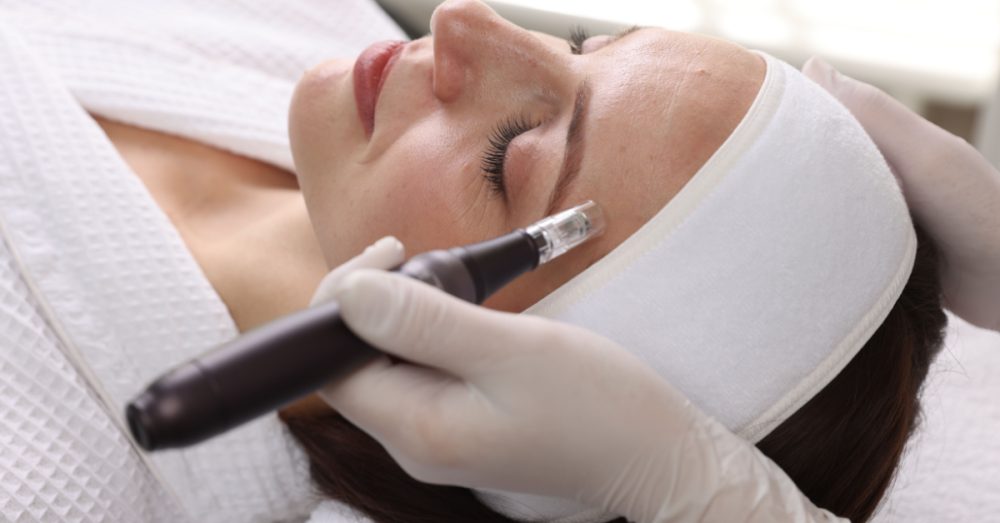
Topical numbing cream is applied first and left on for about 20 to 30 minutes. Once the skin is numb, the provider makes several gentle passes over the treatment area with SkinPen®. Most clients feel light pressure and a mild buzzing sensation throughout, and they report that the discomfort is minimal. SkinPen®’s patented single-use sterile needle cartridge and proprietary BioSheath prevent cross-contamination between procedures, and the Skinfuse® Lift HG hydrogel, which is part of the FDA-cleared SkinPen® protocol, is applied during treatment to protect the skin from friction and support the healing response.
The skin typically looks red and feels tight afterward, similar to a mild sunburn. This is normal and usually fades within 24 to 48 hours.
Before the Microneedling Procedure
Preparation matters. In the weeks leading up to treatment:
- Stop using retinoids at least 5 to 7 days before your session.
- Avoid direct sun exposure for at least two weeks beforehand.
- Disclose any medications, including blood thinners and acne prescriptions.
- Arrive with skin clean and free of active breakouts.
Your provider will advise on anything specific to your treatment plan based on your skin’s condition and history.
Aftercare and Recovery from Microneedling Treatment
Recovery from microneedling is straightforward for most clients. The skin needs a few days to settle, and the right aftercare protects your results.
At Eastside Aesthetics & Wellness, every microneedling treatment, whether SkinPen® or SylfirmX, is completed with a topical exosome application. Exosomes are cell-derived vesicles that carry growth factors, proteins, and signaling molecules directly into the skin. Applied immediately post-treatment when the skin’s microchannels are open, they work with the body’s healing response to support faster recovery, reduce redness, and amplify collagen and elastin production beyond what microneedling stimulates alone. The result is a more accelerated and optimized outcome compared to microneedling without a regenerative step.
For the first 24 to 48 hours after treatment, keep skin clean, skip makeup, and avoid anything active like retinol or exfoliants. Daily sunscreen application is non-negotiable, as the skin is more sensitive post-treatment, and direct sun exposure can cause dark spots or interfere with healing. Most clients return to their routine within two to three days. Full collagen remodeling continues for months beneath the surface.
Can You Microneedle With Active Acne?
No, and this is important. Microneedling over active acne can spread bacteria, worsen breakouts, and increase the risk of post-inflammatory marks. The right treatment approach is to get acne under control first, then address the scars it leaves behind.
If you’re currently managing active breakouts, your provider may recommend waiting or consulting with a dermatologist before beginning scar therapy. SkinPen® is also not recommended for clients who are pregnant or nursing, currently taking isotretinoin (Accutane), on anticoagulant medications, or who have a history of keloid scarring. Your provider will review your full health history during the consultation to confirm candidacy.
Is Microneedling Safe for Darker Skin Tones?
Yes. One of the reasons microneedling is such a well-regarded treatment is that it’s generally safe for darker skin tones, unlike some laser options, which carry higher risks of pigment changes in melanin-rich skin.
That said, post-inflammatory hyperpigmentation is still possible, particularly if aftercare instructions aren’t followed. Choosing an experienced provider who understands how to approach different skin types is the most important factor in reducing that risk.
How Many Microneedling Sessions Are Needed for Acne Scars?
SkinPen® is clinically proven to show significant results in as few as 3 sessions spaced 30 days apart. Severe scarring or deep scars may benefit from additional sessions, and your provider will assess your skin during the consultation to recommend the right starting point.
Scar type matters too. Ice pick scars and deep scars are more stubborn than rolling or moderate scars and may benefit from combination approaches. Your provider will tailor the session count to your specific situation rather than applying a one-size-fits-all plan.
Fading Acne Scars: Expected Timeline
Initial improvements in skin texture are often noticeable within a few weeks of the first session. But fading acne scars fully takes longer, and most clients see significant change after completing their initial series and then continuing to improve over the following months.
Collagen remodeling can continue for up to a year after treatment. That means results often look better at six months than they did right after the last session. Maintenance treatments once or twice a year can help sustain those optimal results.
Combining Treatments for Acne Scarring
SkinPen® Microneedling works well as a standalone treatment, and its results build meaningfully with each session. For clients dealing with more complex or layered scarring, providers may also recommend pairing it with complementary approaches for deeper remodeling.
For select scars, providers may also recommend subcision to release tethered tissue or dermal fillers for isolated deep depressions. These aren’t replacements for microneedling, but additions for clients who need a more layered approach.
Microneedling Versus Other Acne Scar Treatments
Compared to laser resurfacing, microneedling involves less downtime and a lower risk of pigment changes across skin tones. Lasers can be highly effective, but they’re not always the first recommendation for clients with darker skin or a busy schedule.
Microneedling also tends to be more accessible in terms of cost per session, and the cumulative effect of multiple sessions means results build gradually rather than requiring one intensive treatment. It’s one of the most effective treatments available for atrophic scars when done correctly and consistently.
Frequently Asked Questions About Microneedling for Acne Scars
Does microneedling for acne scars hurt if you have sensitive skin?
Topical numbing cream is applied before every session, so most clients feel pressure rather than pain. Those with sensitive skin may experience slightly more redness afterward, but the procedure itself is well-tolerated. Letting your provider know about your sensitivity beforehand allows them to adjust the approach.
Can microneedling make ice pick acne scars worse if done incorrectly?
If performed too aggressively or on the wrong skin condition, like active acne, microneedling can cause irritation or worsen hyperpigmentation. That’s why provider selection matters. Ice pick scars are among the more difficult scar types to treat, and a provider experienced with SkinPen® Microneedling will know how to use adjustable needle depths to target each scar type precisely and safely.
How soon after a breakout can I start microneedling for acne scars?
You’ll generally need to wait until the skin is fully clear of active acne, typically at least a few weeks after your last breakout resolves. Your provider will assess your skin during the consultation and recommend the right time to begin.
Will I need maintenance microneedling sessions after my initial treatment plan?
Yes, most clients benefit from one to two maintenance treatments per year after completing their initial series. Skin continues to age and produce new collagen changes over time, and periodic sessions help sustain the improved texture and reduced appearance of scars.
Does microneedling for acne scars work on the body, not just the face?
Microneedling works on most areas of the body, including the back, chest, and shoulders, where acne scarring is also common. Some clients also use it for stretch marks on the abdomen or thighs. The principles of collagen induction therapy apply regardless of location, though the number of sessions needed may vary by area.
Ready to Treat Your Acne Scars in Issaquah?
Eastside Aesthetics & Wellness offers SkinPen® Microneedling, the first FDA-cleared microneedling device, performed by providers who understand how to approach every skin type with care and precision. If you’re ready to take the next step toward clearer, smoother skin, we invite you to request a private consultation.
Private. Personalized. Exceptional.
Don’t wait to reclaim your confidence. Call us at (425) 657-0355 or click below to request your private consultation today, and join the VIP experience you deserve.